
Nipah Virus: A Growing Global Health Concern
Nipah virus (NiV) represents one of the most formidable pathogens in the modern landscape of zoonotic diseases. As a member of the Henipavirus genus, its clinical trajectory is notoriously aggressive, often escalating from initial influenza-like symptoms to severe respiratory distress and lethal encephalitis. With case fatality rates reaching as high as 75 to 95 percent in certain outbreaks, NiV is classified as a high-priority threat requiring urgent therapeutic intervention.
The Molecular Architecture of a Deadly Pathogen
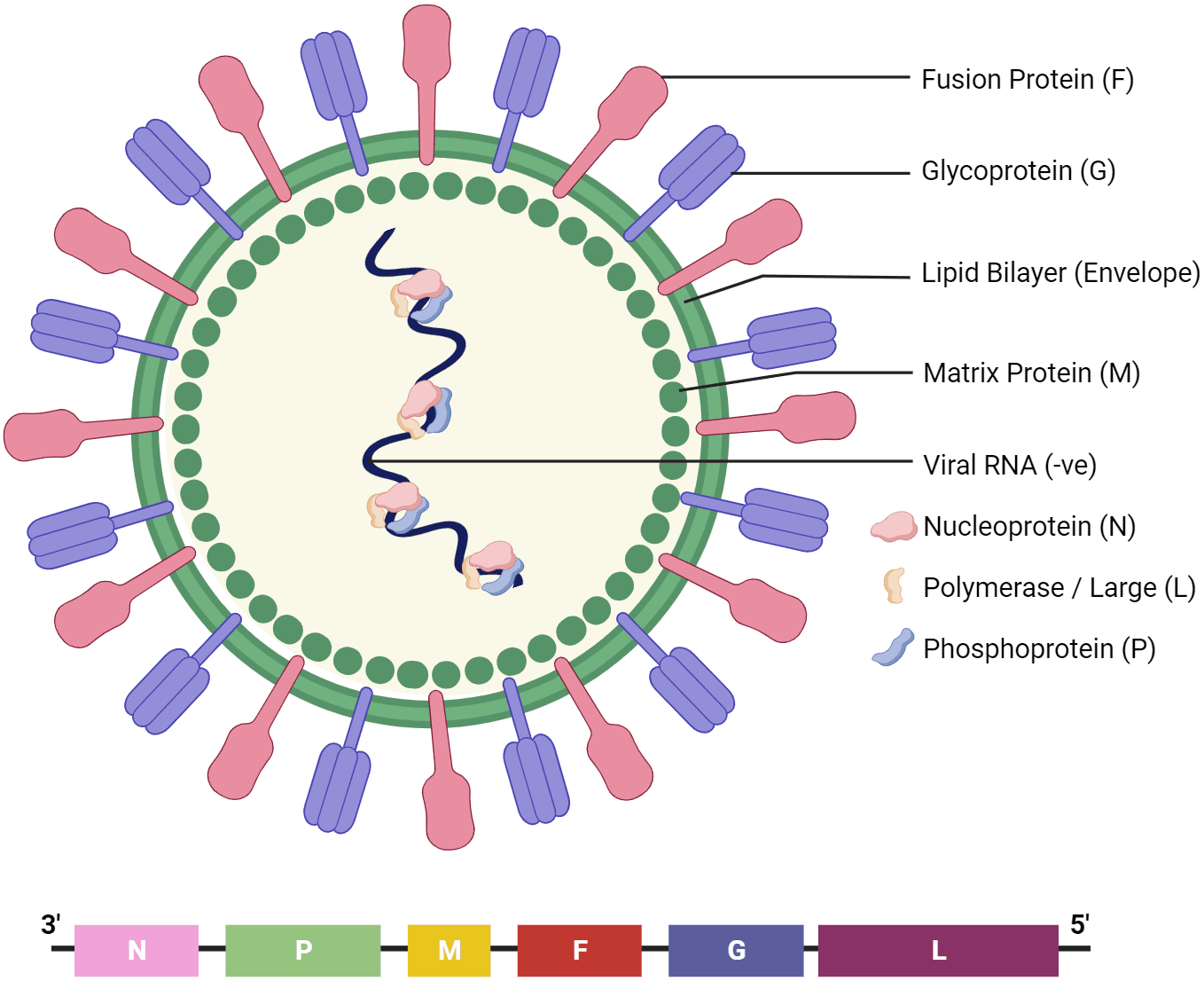
The structural integrity and infectivity of NiV are driven by six critical structural proteins encoded within its negative-sense RNA genome. Understanding these components is essential for the development of targeted neutralizing antibodies and vaccines. The six primary proteins include:
- N Protein (Nucleoprotein): This protein closely encapsulates the viral genomic RNA to form the Ribonucleoprotein (RNP) complex. It self-assembles into a helical structure and utilizes a unique conformation to achieve non-sequence-specific recognition of the viral RNA.
- L Protein (Large Protein): Functioning as the viral RNA-dependent RNA polymerase (RdRp), the L protein serves as the core catalytic enzyme for both viral transcription and genome replication.
- P Protein (Phosphoprotein): The P protein acts as a critical auxiliary factor for the L protein, facilitating the proper function and stability of the polymerase complex.
- G Protein (Attachment Glycoprotein): Existing as a tetramer, the G protein is responsible for identifying and binding to the host cell receptors ephrin-B2 and ephrin-B3. It is the primary target for the development of neutralizing antibodies.
- F Protein (Fusion Protein): A Class I viral fusion protein that exists in a trimer form. It is triggered following the binding of the G protein to its receptor, mediating the fusion of the viral envelope with the host cell membrane. Its pre-fusion conformation is the key factor in inducing potent neutralizing antibodies.
- M Protein (Matrix Protein): The M protein serves as the bridge between the RNP complex and the envelope glycoproteins. It is the primary organizer of the viral assembly and budding processes. Its nucleocytoplasmic trafficking function is vital for maintaining the viral life cycle.
The 7-Stage Progression: Breaking the Blood-Brain Barrier
The transition from a localized respiratory infection to systemic neurological failure follows a systematic, seven-stage pathophysiology.
- Initial Entry: The virus targets epithelial cells in the bronchioles.
- Alveolar Proliferation: Antigenic spread within the bronchi and type II pneumocytes.
- Cytokine Storm: Induction of inflammatory mediators such as IL-6, IL-8, and MCP-1.
- Endothelial Infection: Migration into pulmonary endothelial cells (ECs).
- Systemic Viremia: Entry into the bloodstream, leading to vasculitis and necrosis.
- CNS Infiltration: Crossing into the brain via the olfactory nerve or the Trojan horse model using infected leukocytes.
- Lethal Encephalitis: Disruption of the blood-brain barrier (BBB) and severe brain damage.
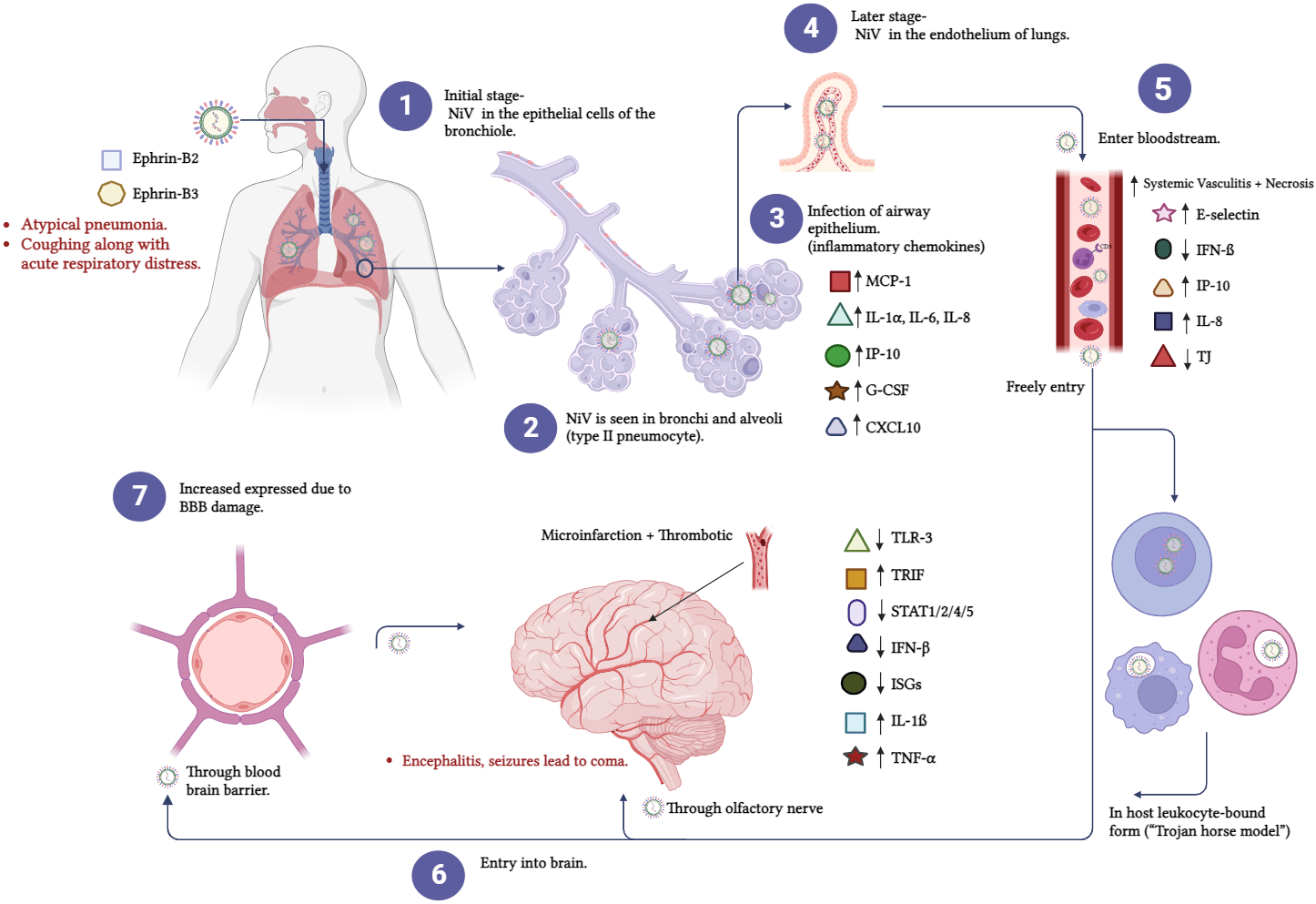
One of the most elusive aspects of NiV is its ability to bypass the BBB. The virus utilizes a Trojan horse strategy, where it hitches a ride on host leukocytes to gain entry into the Central Nervous System (CNS). This process is accompanied by a massive release of TNF-alpha and IL-18, which further degrades the tight junctions (TJs) of the brain microvasculature.
Empowering Research with Pronewbio Solutions
Conducting research on live Nipah virus requires BSL-4 containment, which remains a significant bottleneck for translational science. To solve this, Pronewbio Biotech Ltd. provides a suite of replication-deficient pseudoviruses that allow researchers to perform critical experiments in BSL-2 environments with maximum safety and precision.